What happens to your brand when your website is compromised?
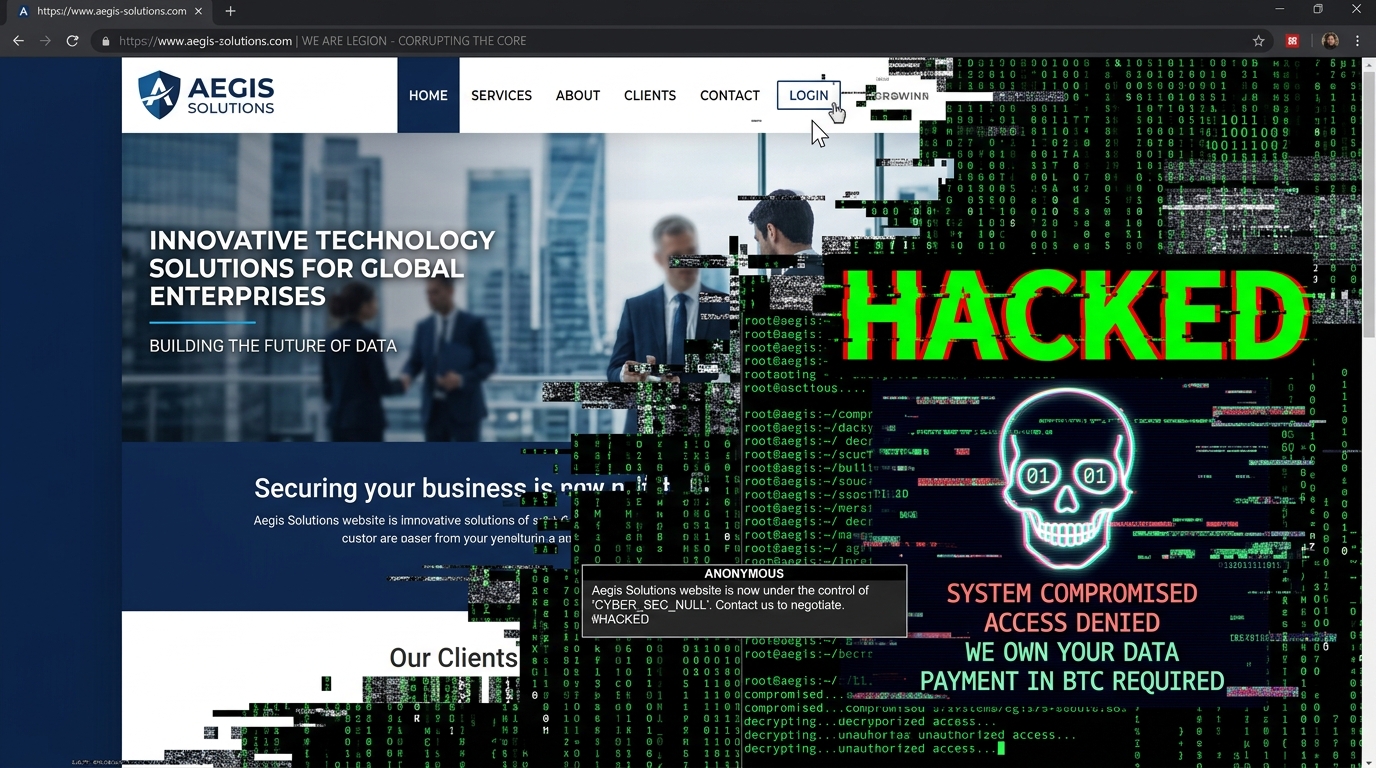
For many organisations, the website is the front door of the business. It’s where customers engage, partners validate credibility, and prospects form first impressions. But while companies invest heavily in design, performance, and user experience, one critical factor is often underestimated, what happens to your brand when your website is compromised?
Website vulnerabilities are not just a technical issue. They are a direct threat to brand reputation, customer trust, and long-term business value. For CEOs and business leaders, the real cost of a vulnerable website is not measured in downtime alone, it’s measured in lost confidence.
Your Website Is Your Brand — Not Just A Platform
Customers don’t separate your website from your brand. For many customers it is their only connection to your business. If your website is defaced in any way or includes a redirection to some form of malicious content customers don’t think, “This is a technical issue.” they think “This company can’t protect itself, can I trust them with my data?” That perception can be far more damaging than the technical incident itself.
The Hidden Impact of Website Vulnerabilities
When vulnerabilities are exploited, the consequences extend far beyond IT teams. It means loss of customer trust. Trust is hard to build and easy to lose. If customers encounter security warnings, suspicious behaviour, or compromised pages, many will not return. Even a short-lived incident can create long-lasting doubt.
Search engines like Google may flag compromised websites as unsafe. This can result in warning messages in search results and reduced rankings. For businesses reliant on online visibility, this can significantly impact lead generation and revenue.
Cyber incidents even relatively small ones can attract media attention, especially if customer data is involved. Once reported, the narrative shifts from your products or services to your security failures.
Customers are increasingly aware of cyber security risks. If they perceive your business as insecure, they may move to competitors who appear more trustworthy.
A compromised website can raise red flags for business partners and investors. It signals potential weaknesses in governance and risk management.
Real-World Examples of Website Vulnerability Impact
These risks are not theoretical. Many organisations have experienced significant brand damage following website-related incidents.
British Airways (2018) — Website Script Injection
British Airways suffered a breach where attackers injected malicious code into its website, capturing customer payment details during transactions. It impacted over 400,000 customer records compromised with £20 million fine from the UK Information Commissioner’s Office. Customers were unknowingly interacting with a compromised website directly affecting brand credibility.
Ticketmaster (2018) — Third-Party Script Compromise
Ticketmaster’s website was compromised through a third-party chatbot integration, which was used to capture payment information. It impacted tens of thousands of customers and was subject to widespread media coverage. This incident highlighted how even indirect vulnerabilities can impact the entire brand.
Forbes (2017) — Malvertising via Website
Visitors to the Forbes website were exposed to malware due to malicious advertising content. It impacted users being blocked from the platform and reputational damage among a tech-savvy audience. Even without a direct breach of internal systems, the user experience was compromised and so was trust.
Why Website Vulnerabilities Are Increasing
The modern web is complex, and complexity creates risk.
Most business websites rely on:
Content management systems (CMS)
Plugins and extensions
Third-party scripts
Cloud hosting environments
APIs and integrations
Each component introduces potential vulnerabilities.
Common issues include:
Outdated software or plugins
Misconfigured security settings
Weak authentication controls
Exposed development environments
Poorly secured APIs
Attackers actively scan for these weaknesses using automated tools.
The Speed of Exploitation
One of the most overlooked risks is how quickly vulnerabilities are exploited. Once a vulnerability is publicly known, attackers can identify affected websites within hours and launch automated attacks at scale. This means the window between vulnerability and exploitation is often extremely short.
If you are not continuously monitoring your website, you may not detect issues until after damage has occurred.
Why SMEs Are Especially at Risk
While large enterprises make headlines, SMEs are often more vulnerable. They may rely on third-party developers and delay updates due to operational constraints. But from an attacker’s perspective, SMEs are often easier to breach and just as valuable.
Protecting Brand Reputation Through Visibility
Preventing website-related incidents is not just about patching vulnerabilities it’s about understanding your exposure before attackers exploit it. This requires monitoring of public-facing assets to gain visibility into vulnerabilities and misconfigurations to create awareness of how your website appears to attackers.
Without this visibility, organisations are effectively reacting to incidents rather than preventing them.
How CyberSentrx Helps Protect Your Brand
CyberSentrx provides organisations with a clear view of their external digital footprint, including the risks associated with public-facing websites.
The platform continuously monitors:
Public Web Vulnerabilities
Identifying weaknesses and misconfigurations that could be exploited.
External Attack Surface
Mapping your internet-facing assets as attackers would see them.
Dark Web Intelligence
Detecting if stolen data or compromised credentials linked to your business are circulating.
Executive and Brand Exposure
Highlighting risks that could lead to impersonation or reputational damage.
Actionable Remediation
Providing clear guidance to fix issues quickly and effectively.
Rather than discovering problems after customers do, CyberSentrx helps organisations identify and resolve risks proactively.
Learn more at:
From Technical Risk to Business Risk
Website vulnerabilities are often treated as IT issues. But their impact is felt across the entire business.
They affect:
Customer trust
Brand perception
Revenue generation
Regulatory compliance
Market position
For CEOs, this makes website security a strategic priority, not just a technical one.
Final Thought
Your website is one of your most valuable business assets and one of your most visible. If it is vulnerable, your brand is vulnerable. In a world where trust is everything, even a small security incident can have lasting consequences. To understand how exposed your website really is and how to protect your brand before attackers exploit vulnerabilities — visit:
Because when it comes to reputation, you don’t get a second chance at a first impression.
Related Articles
Read more on the importance of website vulnerability detection for businesses in our article on "NCSC has removed its website vulnerability detection service - if you used it previously you need to replace this immediately"