OAuth supply chain attacks are no longer theoretical, they are actively driving high-profile corporate breaches.
When tech teams talk about “supply chain attacks,” thoughts typically turn to compromised physical hardware, infected software packages (like SolarWinds or log4j), or malicious open-source dependencies.
However, over the past few years, a quieter, far more pervasive supply chain attack vector has emerged: OAuth tokens and connected SaaS integrations.
Modern businesses run on dozens, sometimes hundreds of interconnected cloud applications. To make workflows seamless, employees click "Sign in with Google," "Authorize with Microsoft," or connect third-party productivity tools to Slack, Salesforce, and GitHub with a single click.
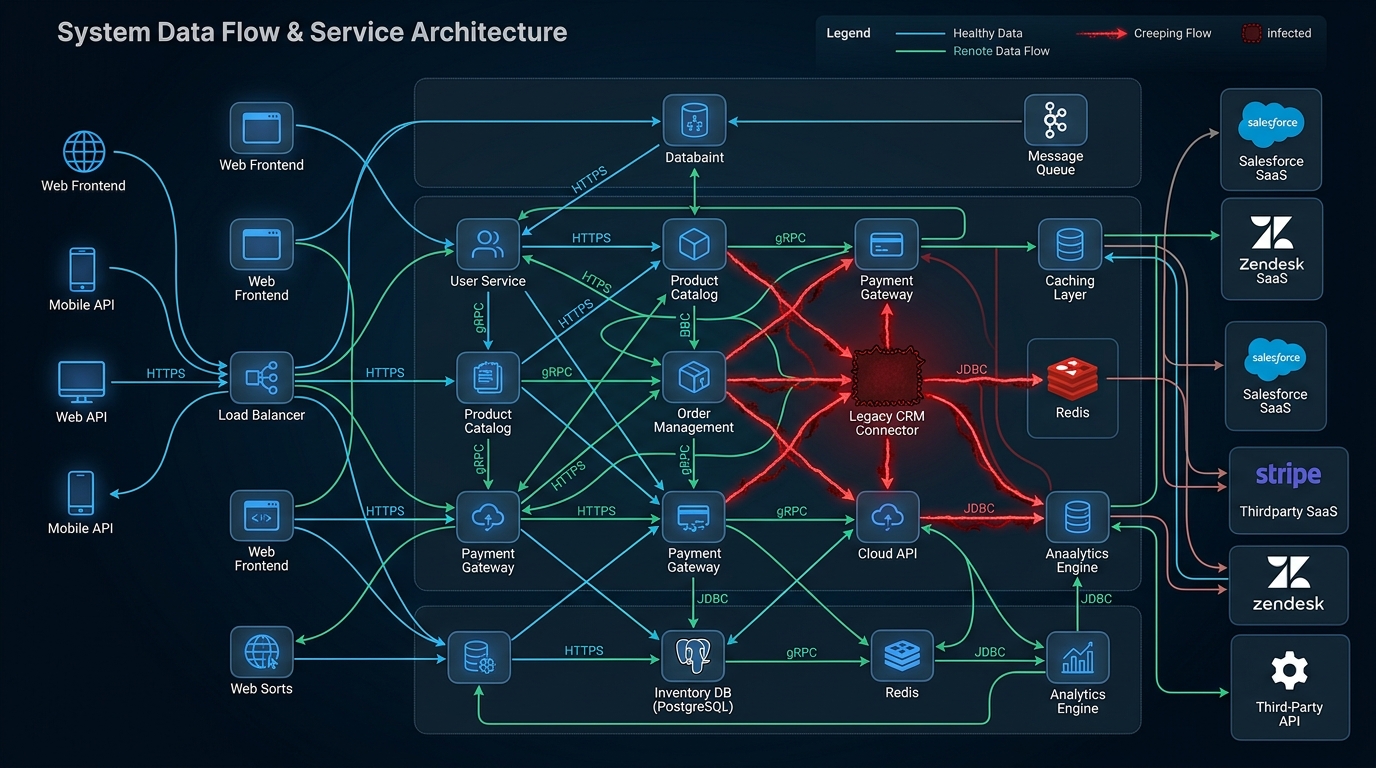
In doing so, they create an invisible web of non-human identities, programmatic access keys, and long-lived OAuth tokens. These tokens are the new supply chain. Attackers no longer need to breach your perimeter directly. They simply breach a third-party app you integrated months ago and walk through your front door using valid, authenticated credentials.
What Is an OAuth Token Supply Chain Attack?
OAuth (Open Authorization) is the industry-standard protocol that allows a third-party service to access your corporate data without sharing your password. When you give a scheduling tool access to your Google Calendar, or a developer tool access to your GitHub repositories, an OAuth token is generated.
This token acts as a digital passport. It bypasses Multi-Factor Authentication (MFA) because the authentication was already completed and carries broad, long-lived, or permanent read/write permissions.
If a cybercriminal breaches the software vendor providing that third-party integration, they can steal the valid OAuth tokens stored on the vendor’s servers. Armed with these tokens, the attacker can silently access your company’s internal databases, emails, source code, or CRM systems, bypassing your firewalls, single sign-on (SSO), and MFA defenses.
Real-World Examples and the Destruction "Blast Radius"
OAuth supply chain attacks are no longer theoretical, they are actively driving high-profile corporate breaches.
1. The GitHub, Heroku, and Travis CI Incident
What Happened: Threat actors compromised the internal systems of Heroku and Travis CI. Two popular developer platforms. From those vendors, attackers stole user OAuth tokens issued to integrate with GitHub.
The Blast Radius: Using these stolen OAuth tokens, attackers accessed dozens of private GitHub repositories belonging to target companies. They downloaded proprietary source code and harvested hardcoded AWS credentials and API keys stored inside. Affected organizations didn't suffer a direct breach; their trusted integration partner was the vector.
2. The Salesloft Drift to Salesforce Campaign
What Happened: Threat actors compromised a third-party integration token associated with Salesloft’s Drift platform.
The Blast Radius: The stolen OAuth token provided legitimate, persistent access to hundreds of customer Salesforce instances. The attackers were able to systematically enumerate CRM records, download customer databases, and extract embedded credentials to pivot into deeper corporate networks.
Why Small and Medium-Sized Businesses (SMBs) Are Primary Targets
Large enterprises often deploy expensive Cloud Access Security Brokers (CASBs) and complex Identity Threat Detection & Response (ITDR) solutions. Small and medium-sized businesses, however, rarely have the budget or dedicated security teams to continuously monitor token hygiene.
This makes SMBs uniquely vulnerable. Employees freely authorize third-party "freemium" SaaS apps, AI assistants, and Chrome extensions using corporate emails without IT oversight. Apps connected during a trial or a short-term project are forgotten, but the OAuth token remains active indefinitely on a vendor’s server.
When vendors, employees, or third-party platforms suffer data leaks, stealer malware (like Lumma Stealer) harvest session cookies, API keys, and OAuth tokens, which are then listed for sale on dark web marketplaces.
How CyberSentrx Stops OAuth Supply Chain Threats Before They Trigger
You cannot protect what you cannot see. When an OAuth token or integration secret is leaked or traded on dark web forums, speed is everything.
At CyberSentrx, we’ve engineered our platform specifically to solve the non-human identity and external exposure problem for small and medium-sized businesses.
CyberSentrx continuously scans dark web marketplaces, cybercrime channels, illicit paste sites, and stealer-logs for compromised corporate credentials, session tokens, API keys, and OAuth authorizations. If a third-party vendor you use is breached or an employee’s token turns up in an underground log, CyberSentrx detects it immediately.
Traditional enterprise security tools require enterprise budgets and months of configuration. CyberSentrx gives SMBs enterprise-grade external identity threat intelligence without the complexity using plug and play set-up. No massive deployment overhead, start monitoring external risks in minutes.
We convert raw dark web chatter and credential leaks into clear, actionable fixes, so you don't need a dedicated SOC team to interpret findings. With simple fixed pricing specifically for growing businesses, ensuring world-class external attack surface management remains accessible.
Take Control of Your External Attack Surface
Don't let forgotten SaaS connections and stolen tokens become your company's backdoor.
Try CyberSentrx for Free Today — Run a scan of your company's external footprint and discover dark web exposure, compromised credentials, and risky perimeter vulnerabilities before threat actors do.