
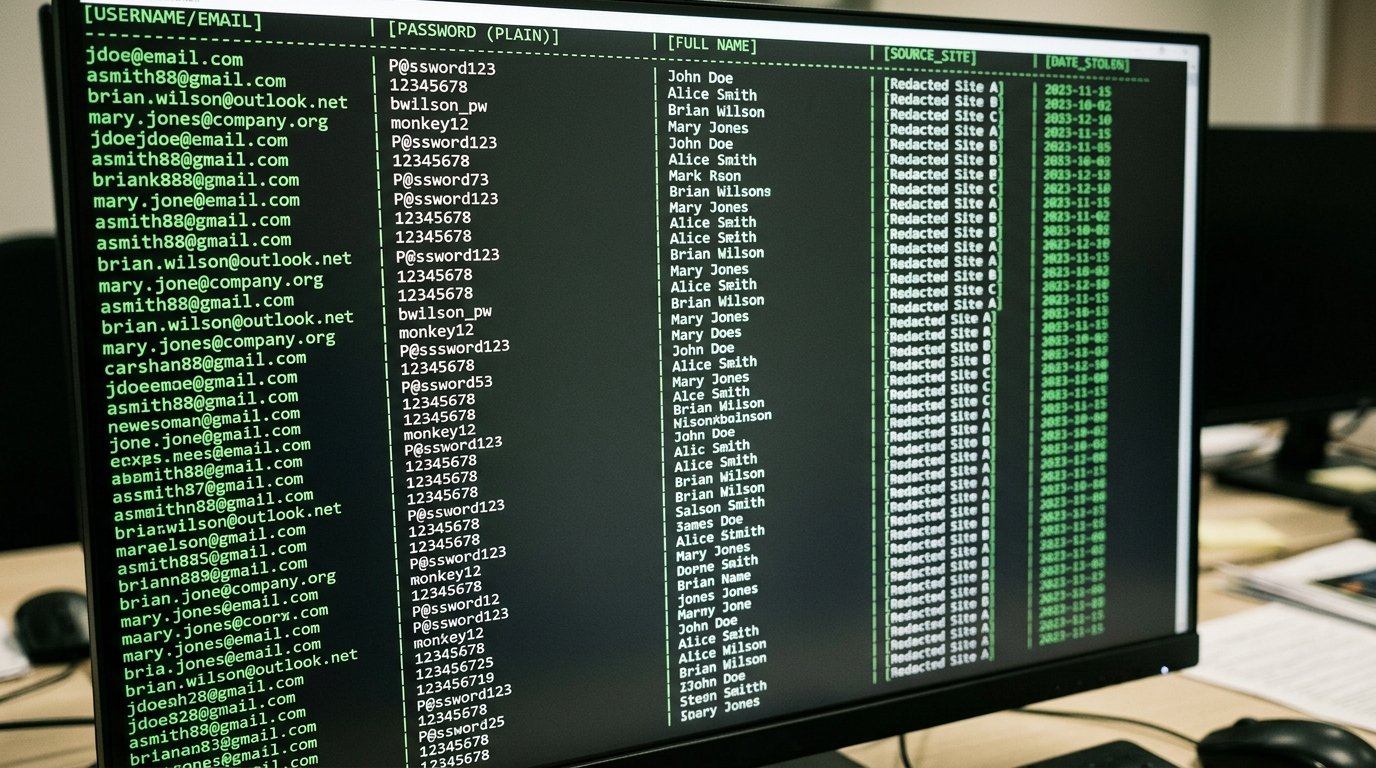
Your biggest security vulnerability isn't a direct hack into your servers—it is your users' exposed external identities.
When security researchers uncovered an exposed database containing over 24 billion compromised records totalling 8.3 Terabytes of data, it sent shockwaves through the cybersecurity industry.
While mega-dumps like RockYou2024 compiled billions of historic plain-text passwords, this massive 24-billion record exposure represents something far more dangerous: a massive, structured collection heavily weighted toward fresh infostealer malware logs.
For modern businesses, hosting providers, and SMBs, this incident highlights a uncomfortable truth: Your biggest security vulnerability isn't a direct hack into your servers—it is your users' exposed external identities.
The Shift: How Cybercriminals Steal Identities Today
Traditional security models focus heavily on perimeter defense: firewalls, intrusion detection, and endpoint antivirus software. But cyber criminals have adapted. Instead of trying to break through sophisticated enterprise firewalls, they simply log in with stolen credentials.
The engine driving this shift is Infostealer Malware (such as RedLine, Raccoon, and Vidar).
What Is Inside an Infostealer Log?
Unlike an isolated database leak containing hashed passwords, an infostealer log acts as a complete digital snapshot of an infected device. These logs routinely bundle:
Plaintext usernames and passwords saved across browser profiles
Target URLs matching the credentials (e.g., cPanel, WordPress admin, corporate email)
Active session cookies and tokens—allowing attackers to bypass traditional Multi-Factor Authentication (MFA)
Device fingerprints and IP logs
When an employee or customer reuses a password across personal and work accounts—or logs into a personal browser on a work laptop—their corporate access ends up up for sale on dark web forums and underground Telegram channels.
The Hidden Cost: Account Takeover (ATO)
Once these 24 billion records are packaged into automated attack tools, malicious actors initiate Credential Stuffing campaigns. Botnets bombard login portals, testing millions of email/password combinations per second.
The Result?
For SMBs: Compromised business email accounts (leading to wire fraud), hijacked e-commerce sites, and stolen customer data.
For Hosting & Web Providers: Increased support ticket volume, server IP blacklisting, brand damage, and elevated client churn when hosted accounts are compromised.
The fundamental flaw in traditional security is timing. Most organizations only realize an identity has been compromised after an attacker successfully logs in and alters settings, exfiltrates data, or locks out legitimate users.
How External Identity Protection Stops the Cycle
To stop Account Takeovers, organizations must extend their security visibility beyond their internal network. This is where CyberSentrx External Identity Protection comes in.
Instead of waiting for a breach report or a support ticket, CyberSentrx monitors the external threat landscape month after month. Not a one off event but a continuous cycle of monitoring.
1. Continuous Dark Web & Stealer Log Intelligence
CyberSentrx actively tracks underground marketplaces, paste sites, and threat channels. We track when a credential, domain account, or session token matching your organization or user base surfaces in a stealer log dump, updating our platform.
2. Proactive ATO Prevention
By identifying compromised credentials before attackers run them through automated credential stuffing engines, CyberSentrx allows IT teams and hosting platforms to force password resets, invalidate hijacked session cookies, and block unauthorized access attempts preemptively.
3. Frictionless, Portal-Ready Security
Whether implemented for internal corporate security or integrated as a high-margin add-on inside hosting portals (like EasySpace), CyberSentrx simplifies identity risk into clear, actionable health scores and automated protection—requiring zero technical overhead from end-users.
Don't Wait for Your Credentials to Surface
The 24-billion record leak is proof that dark web threat actors already hold millions of active login keys. Relying solely on basic password policies or internal firewalls leaves a massive blind spot on the dark web.
Is your domain exposed in recent infostealer logs?
Protect your business, your client portals, and your brand with automated, real-time external identity monitoring.
