Dormant data from past breaches continue to create risk long after the initial incident
In cybersecurity, breaches rarely happen in isolation. What looks like a sudden, high-impact attack in 2026 often began months, even years earlier, quietly, invisibly, and largely unnoticed. In many cases, the true starting point isn’t a vulnerability or a phishing email. It’s a data leak.
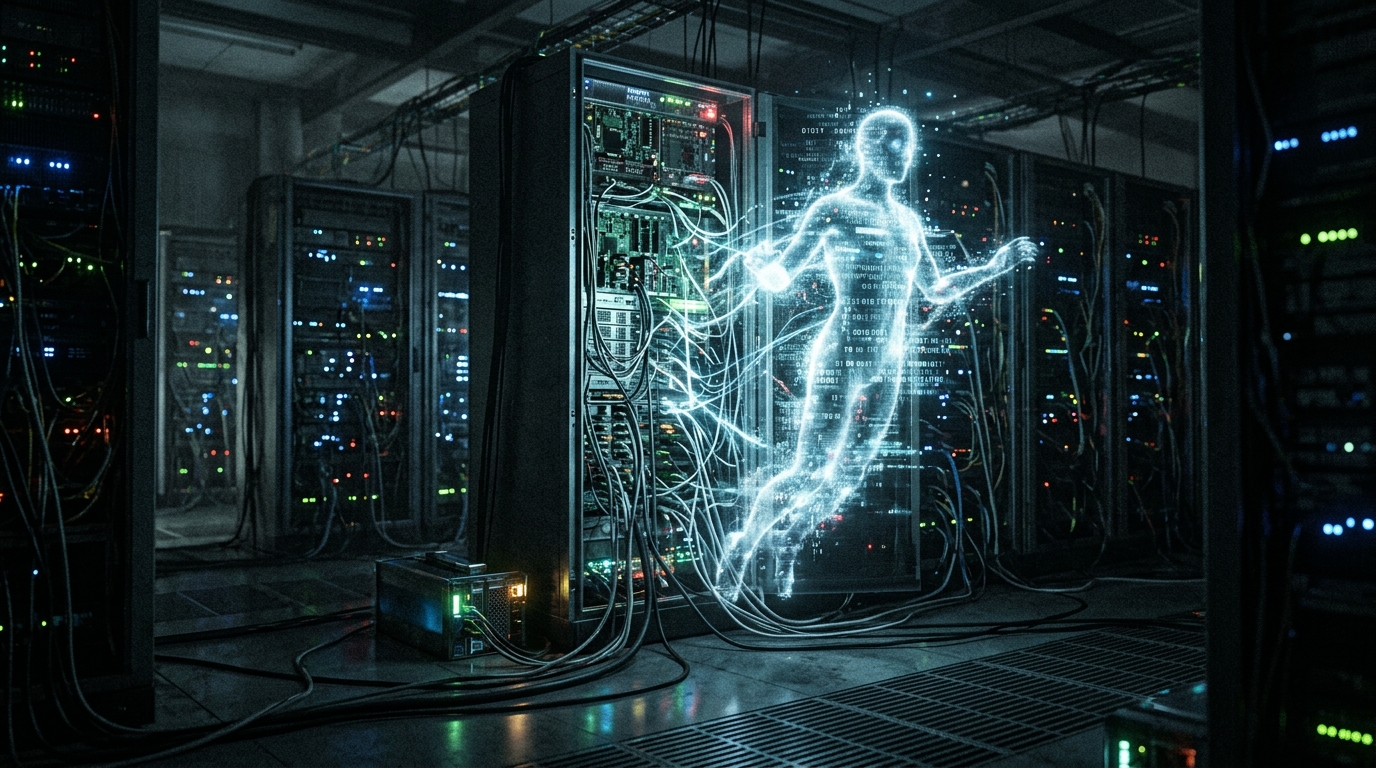
And those leaks don’t disappear. They persist, circulate, and evolve on the dark web becoming the fuel for future attacks. This is the “ghost in the machine”, dormant data from past breaches that continues to create risk long after the initial incident.
For CEOs and business leaders, understanding this delayed threat cycle is critical. Because the data exposed in 2025 is already shaping the breaches of 2026.
The Lifecycle of a Modern Breach
To understand the risk, you need to understand how attackers operate today. A breach is no longer a single event. It is part of a multi-stage lifecycle. From an Initial Data Exposure where credentials, emails, internal documents, or system data are leaked.
The data is then used though Dark Web Distribution and sold on underground marketplaces. Often, it is combined with other breaches to create richer intelligence.
Attackers analyse the data to identify valid credentials from high-value targets to build out potential access points for a future attack.
Months later, attackers use this intelligence to launch credential stuffing attacks and gain initial access to systems. The end result may be ransomware deployment ultimately seeking to likely exploit weakness and gain financial reward from fraudulent activity. By this stage, the original leak may be long forgotten but its impact is just beginning.
The 2026 Reality: Old Data, New Attacks
One of the most dangerous misconceptions in cyber security is that old breaches are no longer relevant. In reality, older data often becomes more valuable over time. Attackers don’t just use fresh data, they use aggregated intelligence built over time.
A Recent Example: AstraZeneca (2026)
This month (March 2026, reports emerged of a cyber incident involving AstraZeneca, where attackers are believed to have leveraged previously exposed data to support a targeted attack. While investigations are ongoing, early indicators suggest that historical credentials and organisational data may have been used and that the breach was not purely opportunistic, but informed.
This reflects a broader trend. Attackers are increasingly using historical leak data to enhance the precision and success of modern attacks. For organisations, this creates a serious challenge because the risk doesn’t reset after a breach is disclosed. It compounds.
Why Dark Web Data Doesn’t Expire
Unlike traditional threats, leaked data has no natural lifecycle. Once exposed, it can persist indefinitely. On the dark web, data is copied and redistributed across multiple platforms and combined with other datasets. This could then be resold multiple times meaning a single breach can generate years of downstream risk.
This means that even if your organisation has not been recently breached, you may still be vulnerable due to historical exposure.
The Compounding Effect of Multiple Leaks
The real danger emerges when attackers combine multiple data sources. Individually, these datasets may seem low risk. Together, they create a comprehensive attack blueprint. Attackers can identify key personnel and craft highly convincing phishing campaigns.
This level of insight significantly increases the success rate of attacks.
Why CEOs Should Be Concerned
This is not just a technical issue. It is a strategic business risk. The delayed nature of these attacks means breaches may appear unexpected and the root causes may be difficult to trace. For CEOs, this creates a visibility gap.
You may believe your organisation is secure because no recent breaches have been reported and systems are up to date. But if your data has been exposed in the past, attackers may already be preparing to use it.
The Shift from Event-Based to Continuous Risk
Traditional cyber security focuses on responding to events.
A breach occurs → investigate → remediate
But in the era of persistent dark web data, this model is no longer sufficient. Risk is no longer tied to a single event. It is continuous. Organisations must shift to ongoing monitoring of data exposure.
How CyberSentrx Helps Identify the “Ghost”
CyberSentrx is designed to help organisations detect and respond to risks that originate outside their network including historical data exposure.
The platform provides:
Dark Web Intelligence Monitoring
Identifying leaked credentials, data, and mentions of your organisation including historical datasets still in circulation.
Credential Exposure Tracking
Highlighting where usernames and passwords may still be valid and exploitable.
External Attack Surface Visibility
Understanding how attackers combine different data points to target your organisation.
AI-Driven Risk Correlation
Connecting historical leaks with current exposure to identify real-world attack scenarios.
Actionable Remediation
Providing clear steps to reduce risk before attackers act.
Rather than treating breaches as isolated events, CyberSentrx helps organisations understand how past exposure can create future risk.
Learn more at:
The Future of Cyber Threats
As attackers become more sophisticated, the use of historical data will only increase. AI-driven tools can now analyse large datasets instantly and identify patterns across multiple breaches. This makes the “ghost in the machine” even more powerful.
Old data is no longer just a record of past incidents. It is a weapon for future attacks.
Final Thought
The breach you’re worried about isn’t always the one that just happened. It may be the one that happened last year, or the year before quietly feeding the next wave of attacks.
In 2026, the most dangerous threats are not always visible. They are built on data that already exists, circulating beyond your control. To understand whether your organisation’s past exposure is putting your future at risk, visit:
Because in modern cybersecurity, what was leaked yesterday can be the cause of tomorrow’s breach.
Related Articles
For more information on the importance of protecting your business external digital presence read our article on "The invisible perimeter - why your firewall can't stop a dark web credential leak"